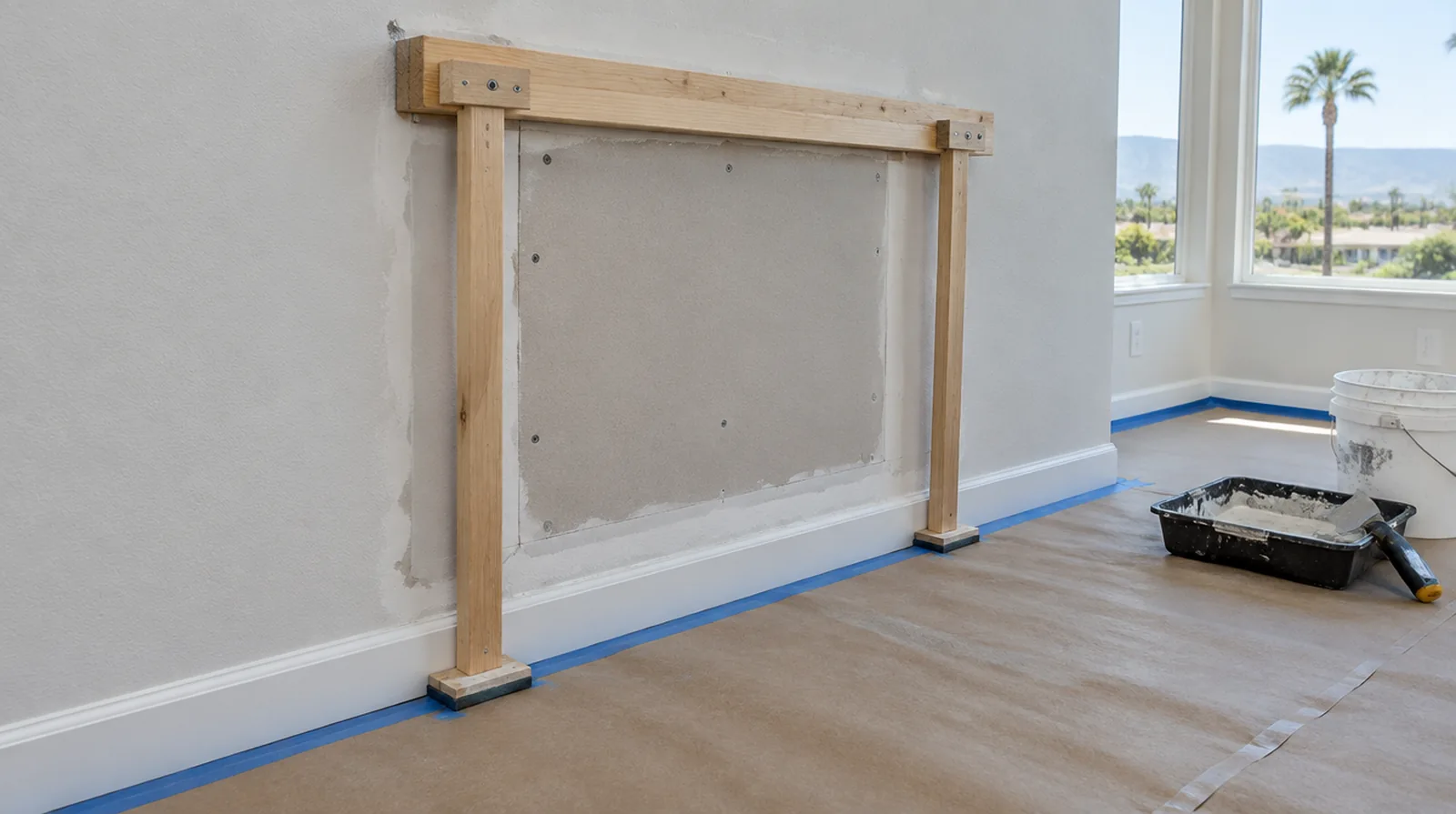
Choose the patch boundary
Loose paper and crumbling gypsum must be removed until the surrounding panel can support a durable repair. A tidy rectangular cut often provides stronger backing than following an irregular broken edge. Where flooring is staying in place, agree on protective coverings and check that tools and material handling will not damage the noticeable finish.
Identify the cause
Damage from an impact is not assessed in the same way as a seam that keeps splitting at a door opening. Describe any change in the defect and check whether the surrounding board is still stable. When damage followed other building work, describe the nearby alterations and the sequence between those changes and the first visible defect.
Prepare for primer
The absorbency of fresh drywall finishing material differs from that of the painted surface beside it. Establish whether the quote includes priming or ends with a sanded surface ready for the painter. If the original finish is unusual, keep a small reference sample or a close photograph to support the discussion about blending and restoration.
Feather beyond the opening
The noticeable finishing area typically extends farther than the hole because a gradual taper hides the repair edge. The gradual transition is particularly important where a window lights the surface from the side. At the handover inspection, review the finish from ordinary room positions using the lighting conditions that were agreed for the work.
Handle small fastener marks
A noticeable screw or nail bump can indicate movement between the board and its supporting framing. Adding suitable fastening nearby may be necessary before the damaged spot receives finishing compound. When building management controls access, agree delivery hours and common area protection before committing to a start or finish date.
Review with side lighting
Use an angled view as well as a direct view when reviewing a finished patch. Window light may reveal a contour that ordinary room lighting hides, while decorative paint sheen creates a separate issue. For a small repair with extensive setup, compare the total scope instead of assuming the price should follow the hole dimensions alone.
Reinforce panel seams
The connection between old board and a patch needs reinforcing joint treatment. The tape belongs in a compatible bedding coat without trapped air or dry unbonded edges. Where the quoted work stops before painting, request a well defined description of what remains so the next decorating stage can be priced realistically.
Build thin finishing coats
Shaping a repair through thinner coats gives more control than depositing all the material at once. Each layer needs sufficient drying time before the next pass can be judged accurately. When reviewing the finished work, use the agreed lighting and natural room viewpoints so the assessment reflects the intended use of the space.
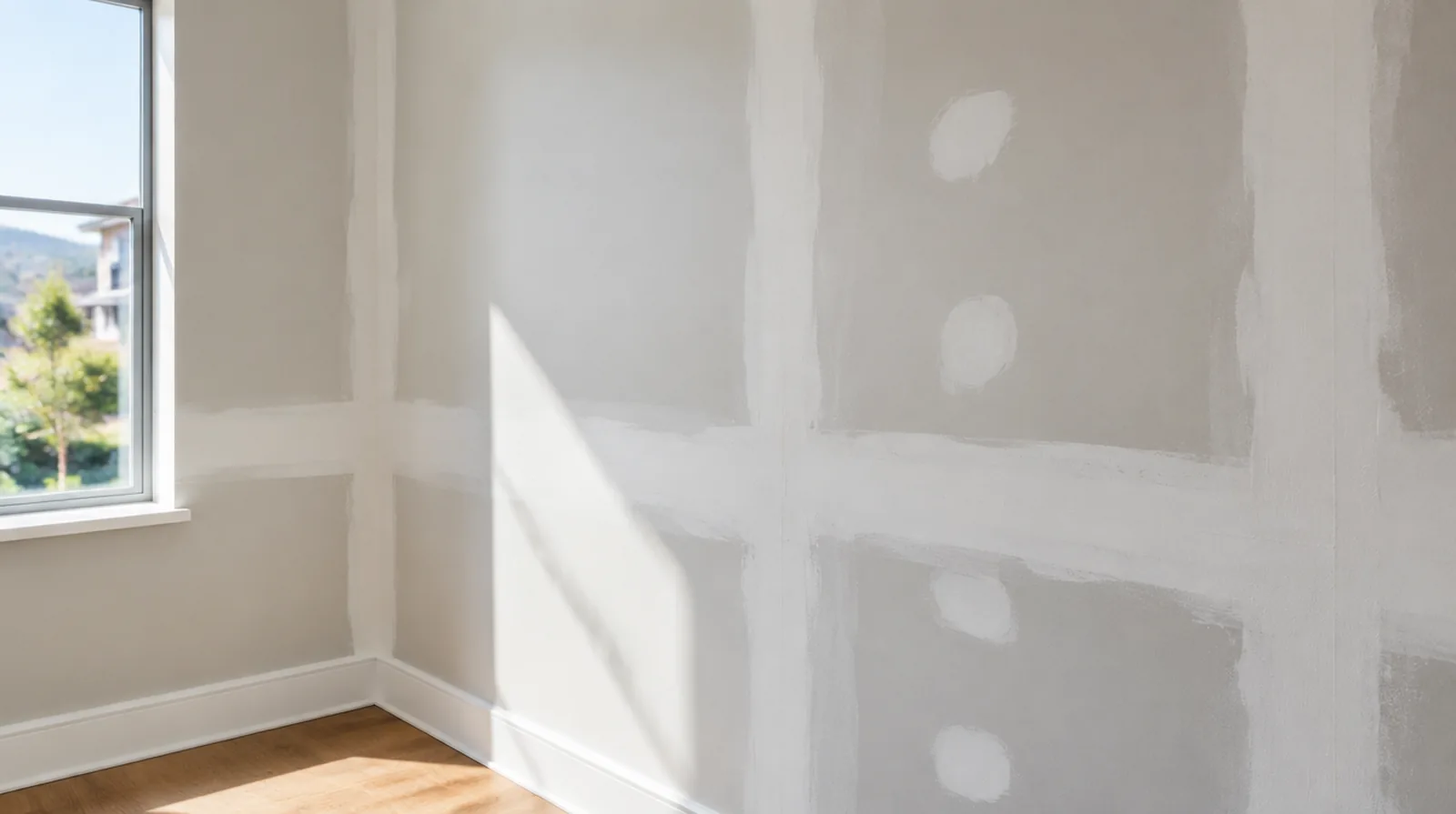
Set the paint boundary
An old paint coating may not accept an inconspicuous local touch up even after a flat repair. Consider a corner to corner decorative boundary when color or sheen differences would otherwise remain noticeable. For a room with restricted airflow, plan drying conditions alongside dust protection and the comfort of people occupying neighboring spaces.
Protect adjacent surfaces
Fine gypsum dust can travel beyond the immediate patch unless floors and nearby furnishings are protected. Identify the possessions to move and agree which adjacent spaces need to stay usable. For an older repair with no clear history, describe when the mark first appeared and whether it has changed through more than one season.
Project context in Irvine
Check building rules for delivery and protect the material route, not just the center of the room. Look across the surface from the window side as well as straight toward it; the two views can reveal very different amounts of unevenness.
Scope questions before finishing
For a project with several trades, agree which inspection or handover point must happen before the next person starts work.
For a planned new wall mounted fixture, resolve its backing requirements while the cavity remains open instead of cutting into completed drywall later.
For a surface that will receive wall covering, share the product requirements early so the finishing stage supports the planned decorative treatment.
If the surface condition is uncertain, allow for an assessment that can distinguish stable material from layers that should not be covered.
If the project is part of a larger remodel, settle the sequence with flooring, trim and cabinet work before setting a final finishing date.
At a surface receiving strong window light, review a dried trial from the side in addition to the normal straight view of the wall.
For a room with restricted airflow, plan drying conditions alongside dust protection and the comfort of people occupying neighboring spaces.
At an edge beside built in furniture, state whether the obstruction will be removed or whether finishing stops at the section that can be reached.
Where a surface has been painted many times, consider whether differences in texture or sheen will require a wider decorative treatment.
If materials must cross common building areas, plan the protection and access route so other occupants are not needlessly obstructed by deliveries.
For a room that stays in use, set a workable boundary around construction while retaining the access people need for normal daily activities.
If there is a fixed move in date, reserve sufficient time for the coating stages after drywall work rather than counting only the installation period.
Explore the Irvine drywall overview for related options, or read the project planning information before arranging the next stage.
More planning details for Irvine
An Irvine room with a broad bright wall deserves a discussion about lighting before finishing begins. Share the proposed paint sheen and any fixed lighting changes while the preparation scope is being set. A room that will receive new cabinetry also needs an agreed sequence so finished walls are not reopened for backing or service adjustments.