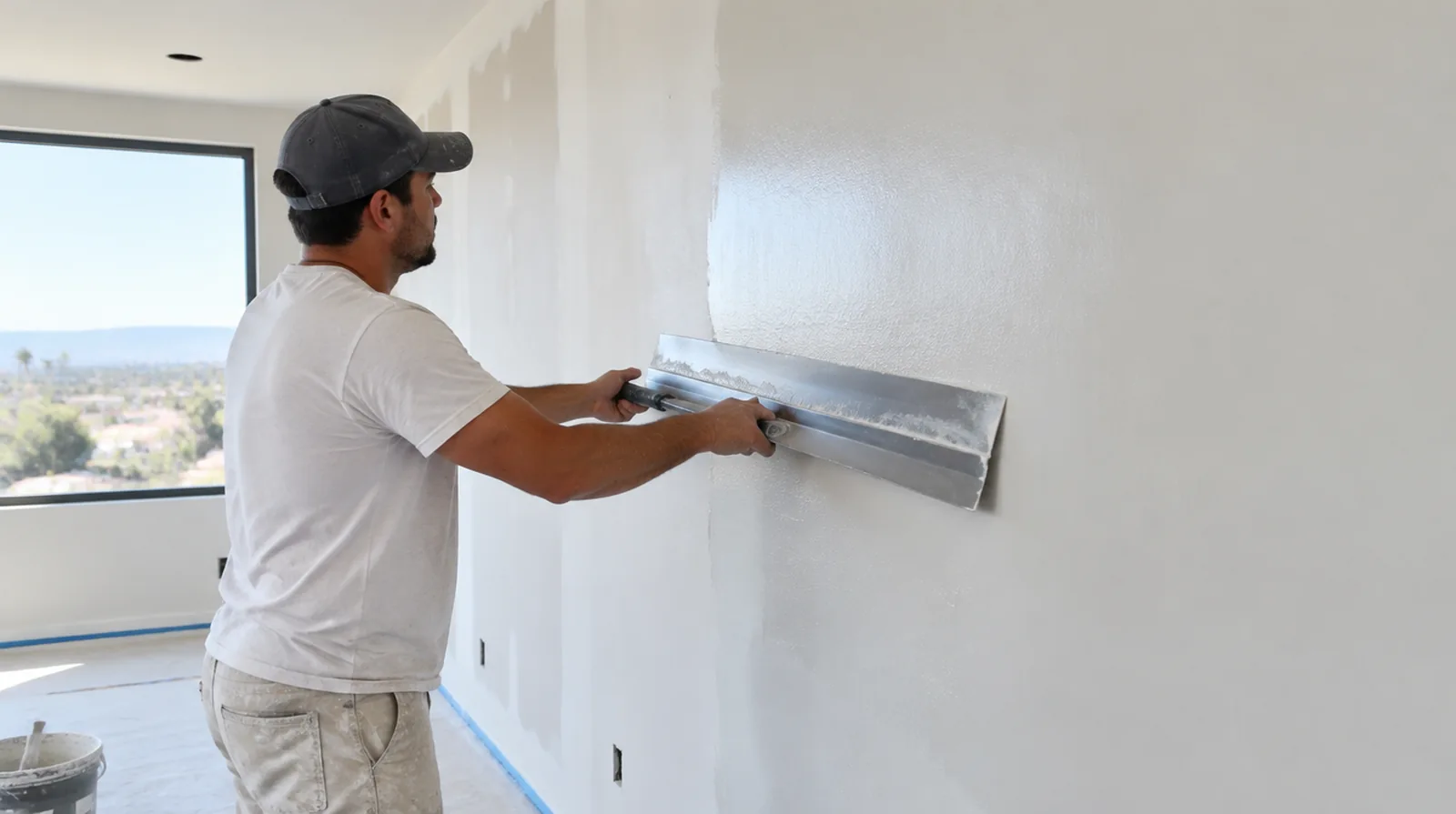
Define the smoothing target
Flattening a light texture is distinct from correcting deep waves across an entire wall. Describe the expected improvement and any retained wall variation in the agreed finish scope. Where a finished perimeter is prominent, decide whether trim stays in position or is removed before agreeing how the new surface meets that edge.
Clean and prepare the wall
Adhesion can be compromised by dirt, oil or residues left on the old coating. Preparation may include cleaning and a suitable bonding treatment based on the condition of the current surface. If a room has only limited ventilation, discuss how the finishing materials can dry without disrupting comfort or spreading dust elsewhere.
Let each coat dry
Allow each application to become ready for the next under the space conditions actually maintained. A rushed next coat can drag or disturb material that has not set up sufficiently. When concealed damage is possible, establish how additional findings and any proposed removal will be recorded before the scope changes.
Inspect using side light
Check the dried surface with light crossing it as well as light facing it directly. Review the dry wall under the conditions that will matter after the interior is decorated. For a limited patch requiring substantial setup, assess the complete package of access and protection instead of relating cost only to the opening size.
Prime before decoration
The new skim needs compatible priming before its final decorative coatings. Priming equalizes absorption and can help identify small corrections before the last paint coat is applied. At the handover inspection, review the finish from ordinary room positions using the lighting conditions that were agreed for the work.
Work around trim carefully
Baseboards, frames and fixed fittings create edges that need neat transitions and protection. Decide whether trim removal is needed or whether a neat stop against it is acceptable. For a project involving a building manager, confirm access hours and protection requirements before promising a start date or a short completion window.
Choose paint with the finish
A glossy decorative choice may reveal variations that a lower sheen makes less apparent. Discuss the final decorative plan before deciding how extensive the preparation of the surface needs to be. Where light reflects along the wall, inspect the complete plane instead of limiting the review to the edge immediately next to the repaired section.
Check underlying movement
Surface refinement cannot stabilize framing movement or repair board that no longer holds securely. Assess recurring cracks and complete necessary reinforcement before covering the area with a skim. Where occupants have dust sensitivity concerns, agree containment and cleaning measures before settling the way the room will be staged.
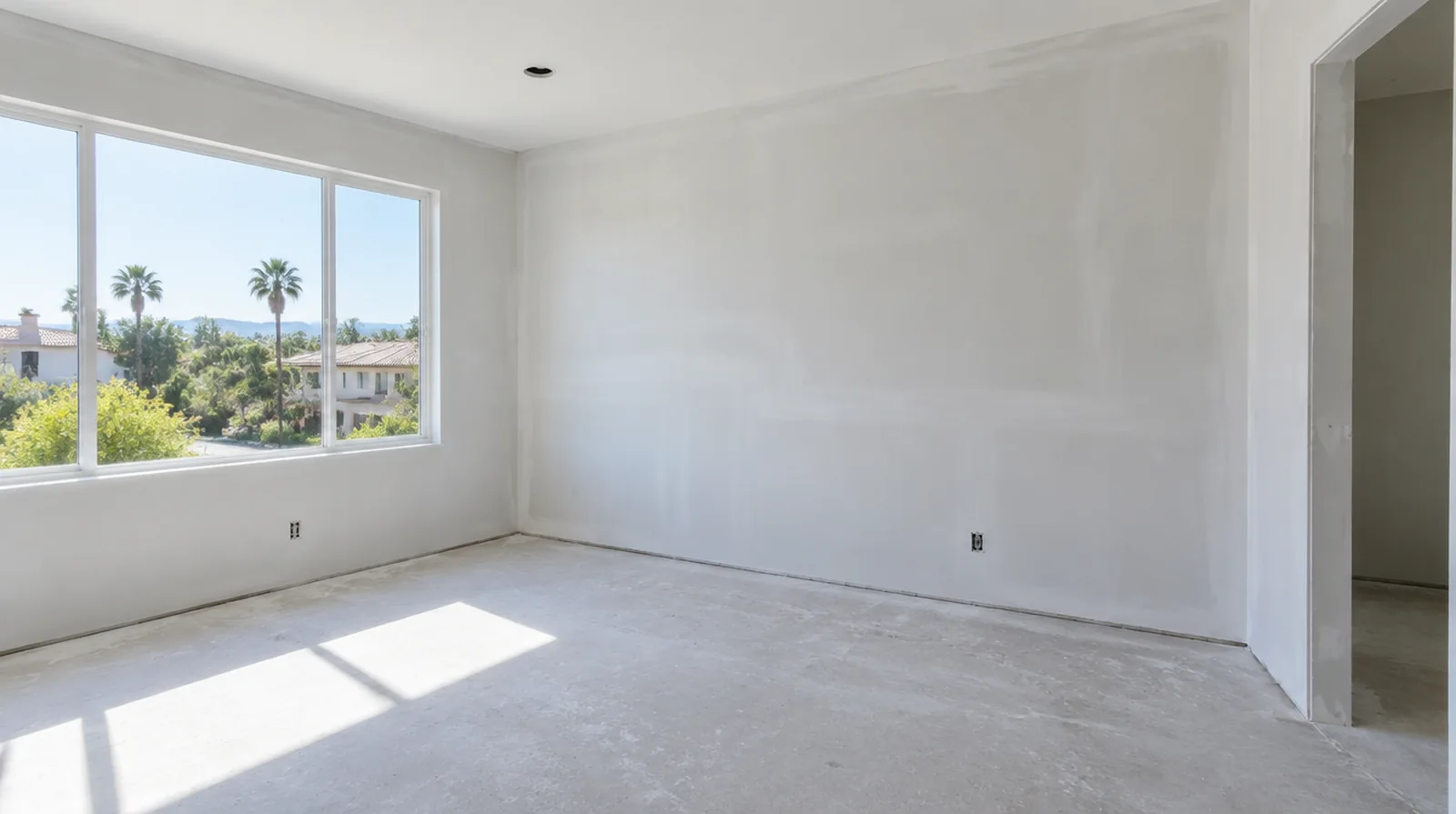
Assess the existing coating
A thin new finish depends on the strength of the coating that will remain underneath it. Separate peeling or poorly bonded material from a stable wall that merely needs smoothing. For a surface carrying numerous paint layers, discuss whether differences in the retained profile or sheen justify decorating a broader area.
Refine with minimal sanding
Careful application limits how much abrasive refinement is needed later. Even so, plan dust protection and extraction for the fine particles produced by broad surface work. If the completion date matters most, allow for intervals between coats as well as active labor rather than assuming the entire process happens continuously.
Project context in Irvine
An Irvine room with a broad bright wall deserves a discussion about lighting before finishing begins. Where indoor cooling is in use, let the finisher evaluate real room conditions rather than assuming outdoor warmth makes every compound coat ready immediately.
Scope questions before finishing
For an initial assessment from pictures, provide an overall room photograph and a detailed view of the defect so both context and scale are apparent.
Before comparing two proposals, check that both include the same protection, finishing and cleanup boundaries instead of comparing totals alone.
For a project with several trades, agree which inspection or handover point must happen before the next person starts work.
If the finish paint is already chosen, share its sheen and color early because those choices influence how preparation of the surface is judged.
If the original finish is unusual, keep a small reference sample or a close photograph to support the discussion about blending and restoration.
While a removed panel exposes the wall surface cavity, complete the necessary review of concealed work before replacement board closes the opening.
When the protected room includes a doorway, check the clearance for panel movement as well as the amount of space available for finishing tools.
For a project involving a building manager, confirm access hours and protection requirements before promising a start date or a short completion window.
When the decorative coating has been selected, tell the finisher its intended sheen and color while the surface preparation standard is still being agreed.
In a room with little free floor space, identify temporary storage for belongings and establish sufficient clearance for the work before delivery.
If the ceiling or wall includes fittings, identify the person responsible for removing and reinstalling each item before the work begins.
Where light reflects along the wall surface, inspect the complete plane instead of limiting the review to the edge immediately next to the repaired section.
Explore the Irvine drywall overview for related options, or read the project planning information before arranging the next stage.
More planning details for Irvine
Look across the surface from the window side as well as straight toward it; the two views can reveal very different amounts of unevenness. Share the proposed paint sheen and any fixed lighting changes while the preparation scope is being set. A room that will receive new cabinetry also needs an agreed sequence so finished walls are not reopened for backing or service adjustments.